Air Fryer Steak (400°F, Sirloin to 145°F)
This page contains affiliate links. If you buy through them, Crisp and Done may earn a commission from qualifying purchases at no extra cost to you.
Thickness and the thermometer decide this recipe, not the clock alone. It is written for sirloin steaks a full 1 inch thick: at 400°F they brown before the center passes medium. The finish follows the same pull-and-rest rule both sources use — take the steaks out about 5°F below the target and let the temperature climb as they rest.
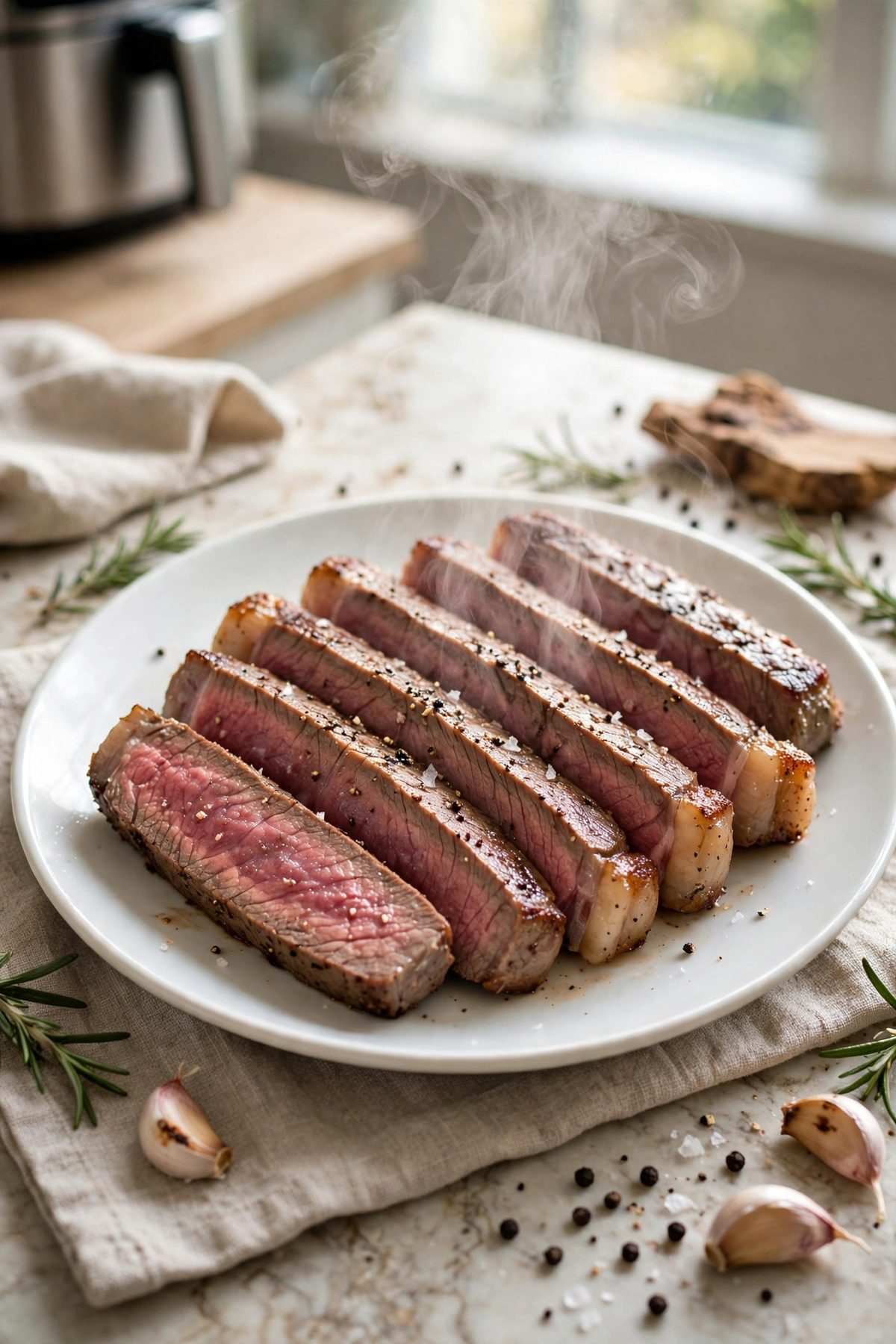
Ingredients
- 4 sirloin steaks, 1 inch thick (1½ lb total)
- Olive oil spray
- 1 tsp garlic powder
- ½ tsp sweet paprika
- 1 tsp kosher salt
- ¼ tsp black pepper
Shopping links: pantry staples go to the exact verified product on Amazon; fresh items go to an Amazon search so you can choose your store, brand, and size.
Steps
- Let the steaks stand at room temperature for 30 minutes so they cook evenly.
- Pat the steaks completely dry on both sides with paper towels. Stir the garlic powder, paprika, salt, and pepper together in a small bowl.
- Spray the steaks with olive oil and coat both sides with the spice mix.
- Preheat the air fryer to 400°F (200°C) for 3–5 minutes.
- Place the steaks in the basket in a single layer, not touching; cook in batches if needed.
- Cook 5–6 minutes, flip with tongs, and cook 5–6 minutes more (10–12 minutes total). Start checking early: for the 145°F finish below, pull the steaks when the thickest part reads 140°F (60°C) on an instant-read thermometer, away from any fat seam.
- Rest the steaks, tented loosely, a full 5 minutes — the temperature rises about 5°F as they rest, to 145°F. Slice against the grain.
Shop this recipe
Verification: Cross-checked against Skinnytaste and Wholesome Yum air fryer steak methods (both preheated 400°F; 10–12 minutes for 1-inch steaks to a medium finish); temperature per USDA/FoodSafety.gov whole-cut beef minimum of 145°F plus a 3-minute rest — this recipe pulls at 140°F and rests 5 minutes to reach it. Published charts list lower finishes (rare 125°F, medium-rare 135°F), but those sit below the USDA minimum and are not recommended.